

Description
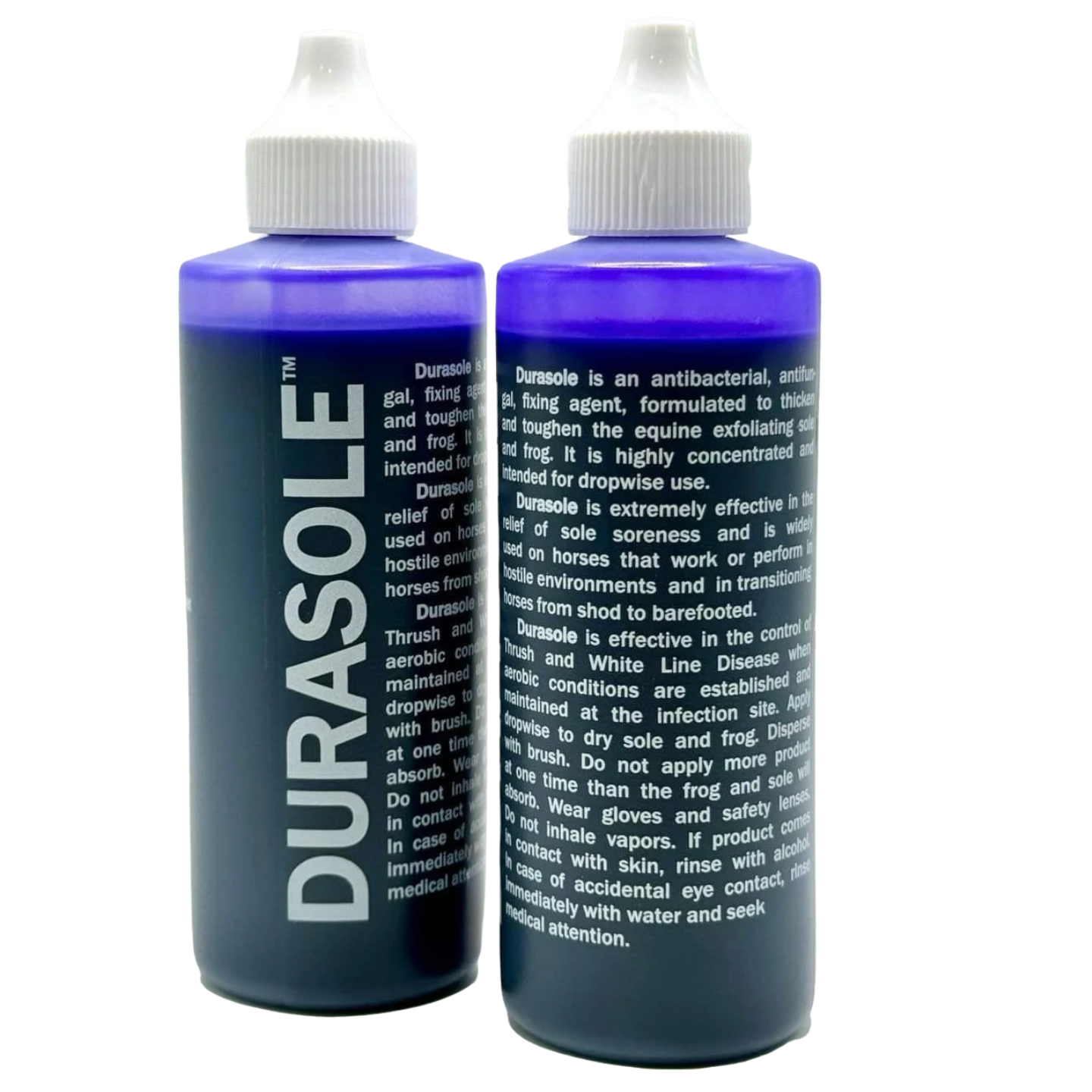
Durasole Hoof Hardener for Horses
Toughen Thin Soles, Support Sore Feet, and Build a Stronger Hoof Barrier
Durasole Sole Hardener is a concentrated hoof-care product designed to harden the exfoliating sole and frog in horses with thin soles, bruised feet, and sole sensitivity. It is widely used on performance horses, barefoot transition horses, and horses working on abrasive or unforgiving footing. Both the manufacturer and major retailers describe it as a sole hardener that creates a “living pad,” helps alleviate sole soreness, and supports control of thrush and white line disease when proper aerobic hoof conditions are maintained.
If you are building a full hoof-care routine, you can browse more products in our horse care collection or shop barn and health essentials in our online store.
What Is Durasole Used For?
Durasole is used to harden the horse’s exfoliating sole, improve the protective capacity of the sole and frog, and create a tougher barrier between the sensitive structures of the hoof and the ground. It is especially popular for:
- horses with thin soles
- horses with sore feet or bruised soles
- horses transitioning from shod to barefoot
- horses working on hard, rocky, or abrasive terrain
- horses needing extra sole support while maintaining moisture balance in the foot
Because it works by thickening the exfoliating sole rather than coating the hoof with an impermeable oil layer, it is often preferred by owners and farriers who want a functional sole toughener rather than a superficial sealant.
How Durasole Hoof Hardener Works
Forms a “Living Pad” Instead of a Heavy Surface Coating
One of the biggest differences between Durasole and many hoof dressings is how it works. According to the manufacturer and retailer product pages, Durasole:
- swells and thickens the cell membranes of the exfoliating sole
- does not harden the hoof by coating it with impermeable oils
- does not affect the proximal sensitive sole
- can be used over extended periods on chronically thin-soled horses without drying out the foot when used as directed
That matters because many horse owners worry that repeated use of sole hardeners will over-dry or deaden the hoof. Durasole is marketed specifically as a product that helps toughen the foot without compromising hoof moisture balance when correctly applied.
Durasole Hoof Hardener Benefits
Helps Alleviate Sole Soreness
Durasole is formulated for horses with sore feet, especially those that become sensitive on hard ground, gravel, or after trimming. Retail listings repeatedly position it as a sole toughener for sore-footed horses.
Ideal for Thin-Soled and Bruised Horses
This hoof hardener is a strong fit for horses with naturally thin soles, repeated sole bruising, or sensitivity after shoe removal. The product is commonly recommended for horses that need more protection between the sensitive sole and the environment.
Useful in Barefoot Transition Programs
Owners transitioning horses from shoes to barefoot often look for ways to support comfort while the hoof strengthens. Durasole is widely used in those programs because it helps the sole and frog become tougher over time.
Supports Thrush and White Line Management
The manufacturer notes that Durasole also aids in the fight and prevention of thrush and white line disease when the infected area is kept in proper aerobic conditions.
Durasole Ingredients
Durasole Sole Hardener contains:
- Isopropyl Alcohol
- Formalin
- Iodine
- Potassium Iodide
- Tannic Acid
- Acetone
These ingredients work together in a highly concentrated iodine-based formula intended for topical hoof application only.
Why Many Farriers Prefer Durasole Hoof Hardener
No Copper Naphthenate and No Essential Oils
A major selling point in both retailer and manufacturer content is that Durasole does not contain copper naphthenate or essential oils. That makes it stand out from some other hoof products that can be overly harsh or drying with repeated use.
Highly Concentrated Formula
The manufacturer states that Durasole is highly concentrated and should be used in small quantities, noting that only a few drops can make a noticeable difference.
Long-Time Industry Reputation
The brand site highlights that Durasole has been distributed since 1978 and used extensively on equine athletes working over difficult terrain, from racetracks and show rings to endurance trails and polo fields.
Durasole Hoof Hardener Directions
How to Apply Durasole
According to the listed instructions:
- Apply drop-wise to the sole and frog
- Disperse with a brush
- Do not apply more product at one time than the sole and frog will absorb
Because the formula is concentrated, controlled application is important. A little goes a long way.
Best Use Cases
Durasole is often used:
- after trimming on horses with tender soles
- during wet seasons when hooves soften easily
- during barefoot transitions
- on working horses exposed to hard ground, trails, rocks, or show environments
Durasole for Thrush and White Line Disease
Is Durasole Good for Thrush?
The manufacturer says Durasole aids in the fight and prevention of thrush and white line disease when aerobic conditions are established and maintained at the infection site. That means it can be part of a broader hoof-care plan, but success depends on correct trimming, cleaning, and environmental management too.
Does Durasole Treat White Line Disease?
It can help support control of white line disease when the hoof is managed correctly and the infected area is exposed to proper air flow, but it is not a substitute for farrier care or veterinary guidance in severe cases.
How Long Does Durasole Hoof Hardener Take to Work?
The exact timeline depends on the severity of sole sensitivity and hoof condition, but Durasole is marketed as highly concentrated and effective in small amounts. Many owners use it routinely while monitoring comfort, sole firmness, and hoof response over time. For chronically thin-soled horses, it may be used over extended periods as directed without drying out the foot.


Reviews
There are no reviews yet.