

Key Takeaways – Nitrofurazone ointment for horses
You’ll Get a complete guide to uses, dodsage and buying tips of nitrofurazone ointment for horses. Check out our summary of what we will cover below..
| Question | Quick Answer |
|---|---|
| What is Furazone? | Furazone is a nitrofurazone-based topical ointment used for surface bacterial infections in wounds, burns, and cutaneous ulcers. |
| When is it commonly used? | Horse owners often use it for minor wounds, cuts, scrapes, burns, and surface skin irritation when appropriate. |
| Can it help with proud flesh? | It may be part of a wound-care routine, but proud flesh usually needs careful bandaging, monitoring, and sometimes veterinary treatment. |
| Is it the same as Betadine? | No. Betadine is usually used as a cleanser or antiseptic rinse. Furazone is a topical antimicrobial ointment. |
| Should you wear gloves? | Yes. The label warns users to wear gloves or wash hands after application. |
| Where can you buy it? | You can buy Furazone® Nitrofurazone Ointment for Horses directly from Equine Essential Hub. |
What Is Furazone for Horses?
Furazone for horses is a topical wound-care ointment made with nitrofurazone, an antimicrobial ingredient used on the skin. Horse owners usually turn to it when they are dealing with cuts, scrapes, burns, surface wounds, or stubborn skin irritation that needs more than a simple rinse.
In plain words, Fura-zone oinment is not a wound wash. It is not a bandage. It is not a magic healing cream either. It is a topical antimicrobial ointment that helps manage surface bacterial contamination when used correctly. That difference matters because a wound still needs proper cleaning, protection, and monitoring.
The product is commonly discussed under names like:
- Furazone ointment
- Nitrofurazone ointment for horses
- Furacin-type yellow wound ointment
- Horse wound-care antimicrobial ointment
If you are researching before buying, the big question is not just “Does Furazone work?” A better question is: Is this the right wound-care product for this specific wound?
That depends on the type of wound, depth, location, infection risk, and whether your horse is lame, swollen, or in pain. A small surface scrape is very different from a deep puncture near a joint. So yes, Furazone can be useful in the right setting, but it belongs inside a complete wound-care plan.
You can view the product here: Furazone® Nitrofurazone Ointment for Horses.
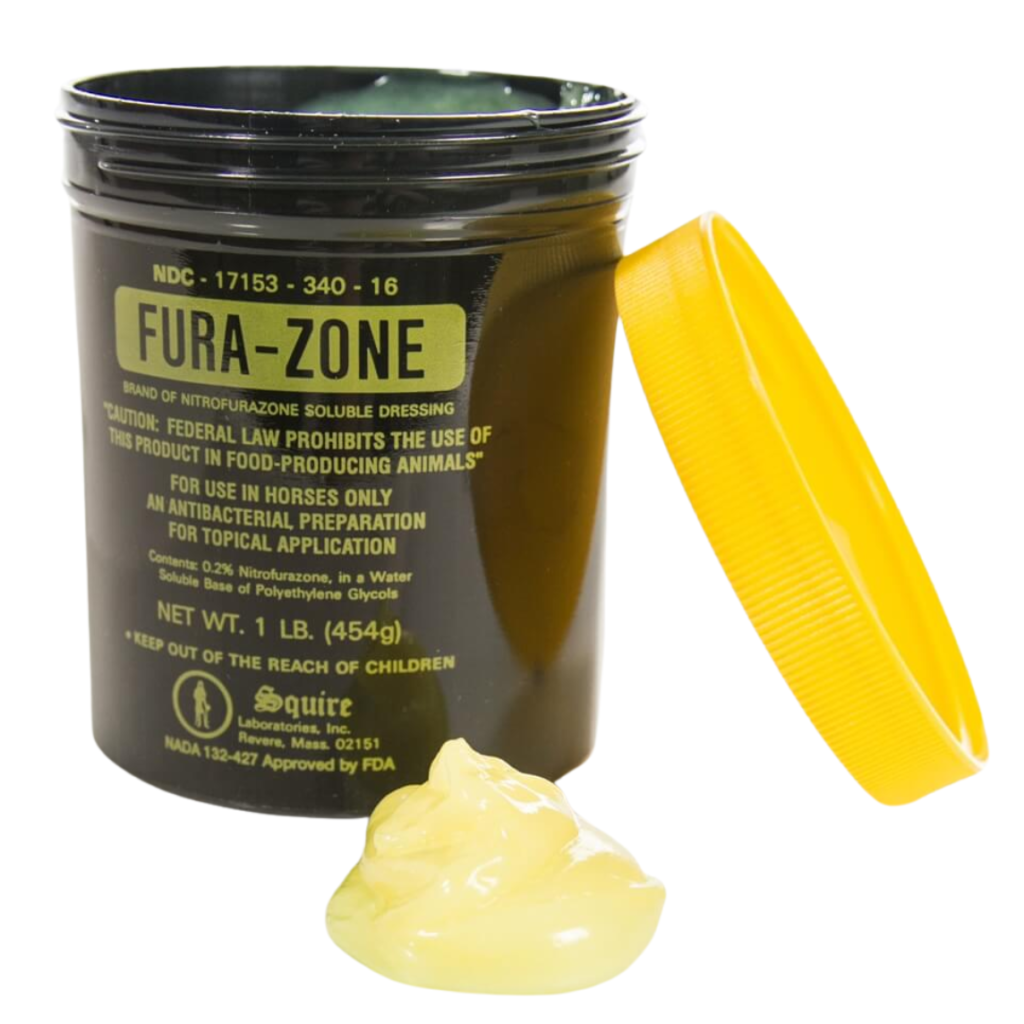
For other care products, browse Horse Care New or the full Equine Essential Hub shop.
When to Use Nitrofurazone ointment for horses: Wounds, Burns, Cuts, Scrapes, and Proud Flesh Concerns
The best use cases for Furazone for horses are usually surface-level wound situations where antimicrobial protection is needed. That includes many common barn injuries, but not every injury.
Furazone may be considered for:
- Minor cuts
- Scrapes and abrasions
- Surface burns
- Skin irritation
- Superficial wound protection
- Cutaneous ulcers, when directed by a vet
- Wounds where bacterial contamination is a concern
For small barn injuries, Furazone is often considered after the wound has been cleaned and assessed. A horse might come in with a gate scrape, a rubbed heel bulb, a small burn, or a surface cut from turnout. In those cases, the wound may need a gentle rinse, a clean dry surface, and a thin topical layer to help protect against surface bacterial contamination. The key is to clean first, then apply. Ointment over dirt does not help much.
Now, what about furazone ointment for proud flesh horses? This needs a careful answer. Proud flesh is excessive granulation tissue, usually seen in lower-leg wounds where healing is difficult. Furazone may be part of a wound-care conversation, but proud flesh itself often needs better bandaging, movement control, and sometimes veterinary treatment. If the tissue rises above the wound edges, bleeds easily, or keeps expanding, don’t just keep applying ointment and hoping. Get a vet involved.
Use Furazone carefully for surface wound support. Call your vet fast if you see:
- Deep punctures
- Heavy bleeding
- Wounds near joints
- Exposed tendon or bone
- Severe swelling
- Lameness
- Bad smell or pus
- Worsening proud flesh
- Burns larger than a small area
For minor wounds, nitrofurazone ointment horse wound healing support can be useful. For serious wounds, it should never replace veterinary care.
How to Use Nitrofurazone ointment for horses : Step-by-Step Application
Here is a practical, barn-friendly process for how to use Furazone on horses.
Step 1: Put on gloves.
This is not optional. Furazone carries safety warnings for handlers, so use disposable gloves before touching the ointment.
Step 2: Assess the wound first.
Look at the location, depth, bleeding, swelling, and whether your horse is lame. If it looks deep, painful, or near a joint, call your vet before applying anything.
Step 3: Rinse the wound.
Use clean running water, sterile saline, or a vet-approved wound rinse. The goal is to remove dirt, manure, shavings, dried blood, and debris without scrubbing harshly.
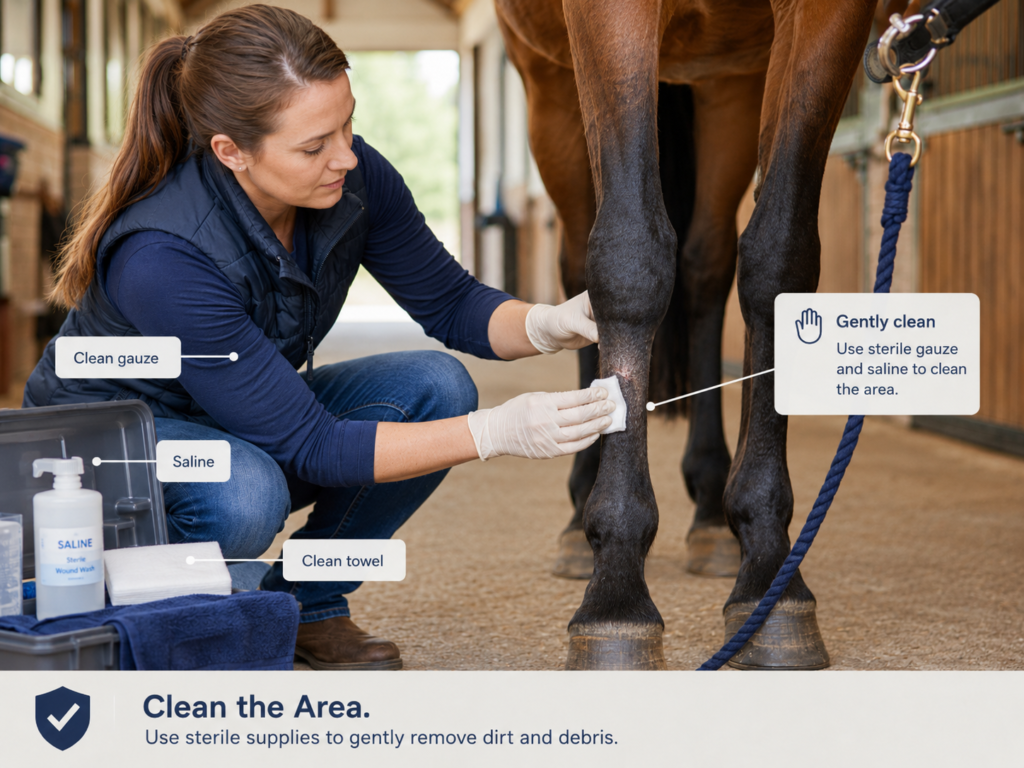
Step 4: Use a mild cleanser only if needed.
If the wound is very dirty, some vets recommend diluted Betadine or diluted chlorhexidine. Do not use strong, full-strength antiseptics repeatedly on healthy healing tissue unless your vet tells you to.
Step 5: Pat the area dry.
Use clean gauze. Ointment sticks better to a clean, slightly dry surface than to a soaking wet wound.
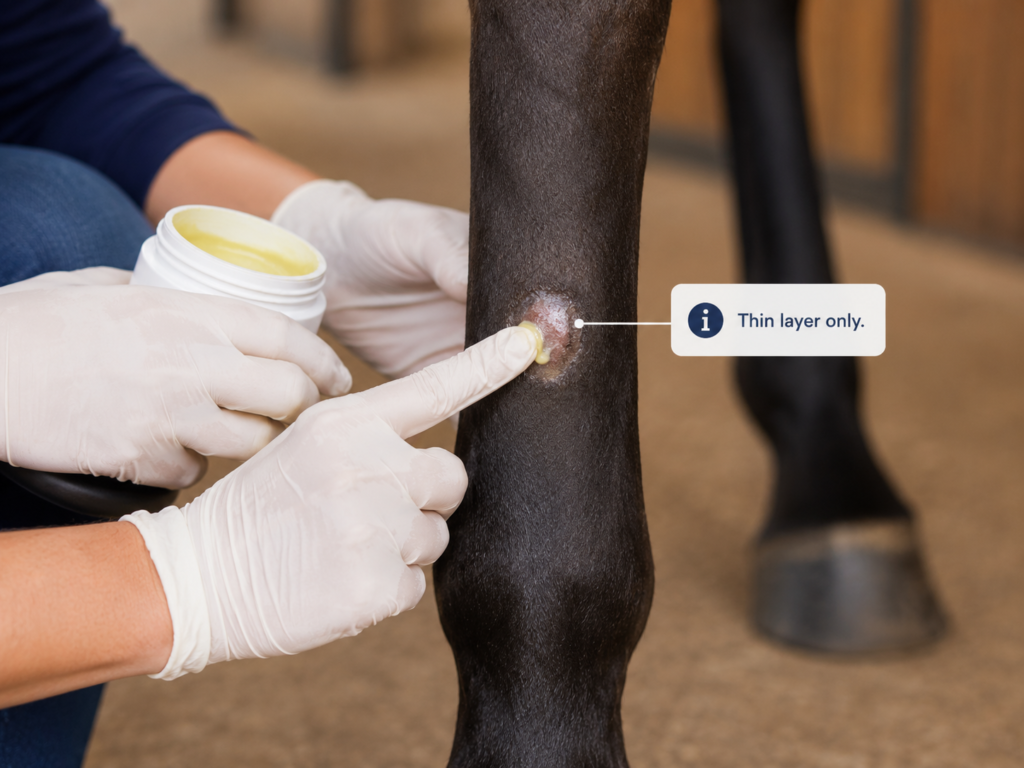
Step 6: Apply a thin layer of Furazone.
You do not need a thick glob. A light, even layer is usually better. Too much ointment can trap dirt and make the area messy.
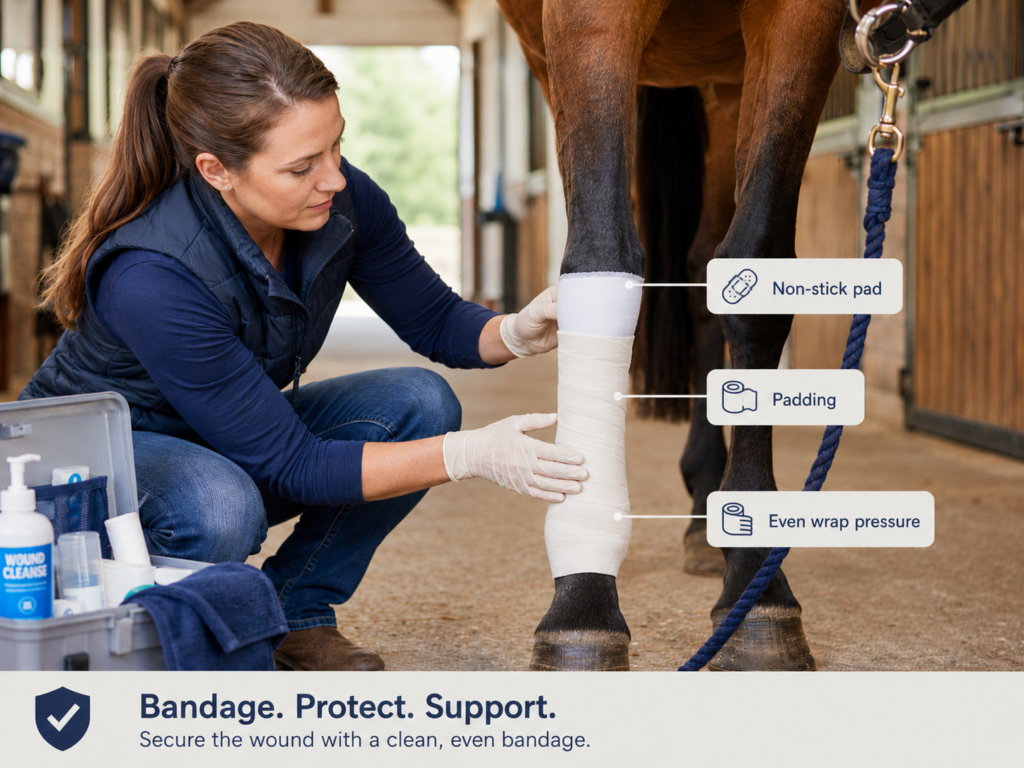
Step 7: Cover if the wound location needs protection.
Lower-leg wounds often need a non-stick pad, padding, and a stable wrap. Body wounds may not always need covering, depending on location and weather.
Step 8: Recheck daily.
Watch for heat, swelling, drainage, bad smell, or increased pain. If the wound gets worse, stop guessing and call your vet.
Summary How to Use Furazone on Horses
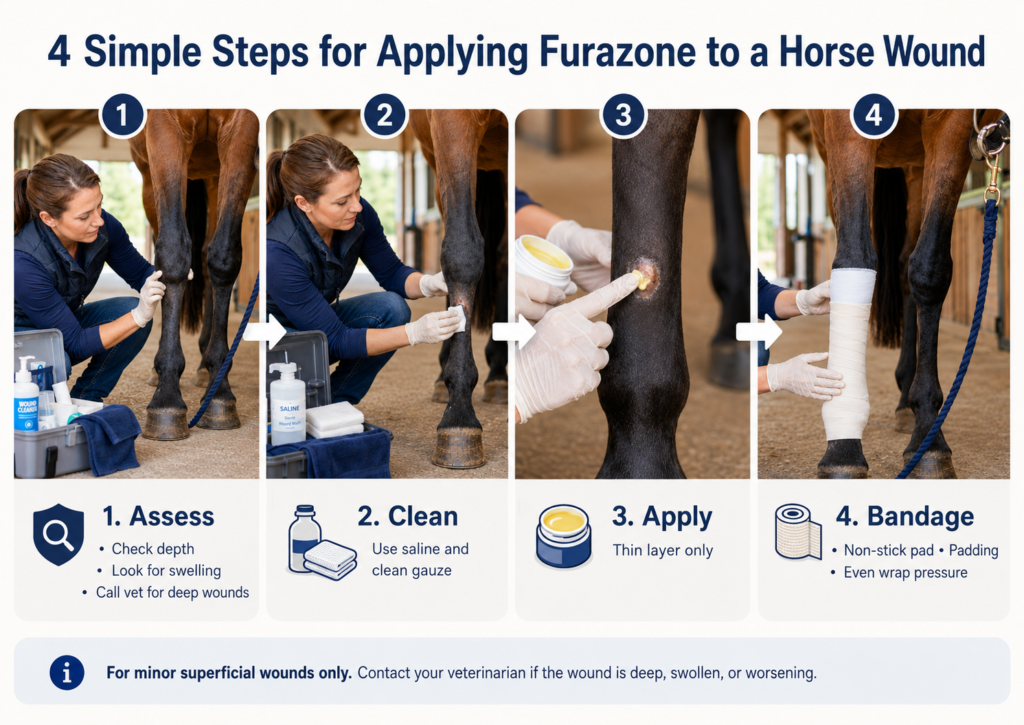
A good rule: Furazone supports wound care. It does not replace cleaning, bandaging, or monitoring.
Before applying any wound ointment, it helps to have the basics ready: gloves, saline, clean gauze, non-stick pads, wrap material, and a thermometer. For a full barn setup, see our horse first-aid kit essentials guide.
Furazone vs Betadine for Horses
A lot of owners compare furazone vs betadine for horses, but they are not really the same type of product.
Betadine is povidone-iodine. It is usually used as an antiseptic cleanser or diluted wound rinse. It is most useful early in the cleaning stage, especially when the wound is dirty. But strong antiseptics can irritate healthy tissue if overused or used too strong. That’s why many wound-care instructions talk about diluted Betadine, not repeated heavy application.
Furazone is a topical antimicrobial ointment. It is usually applied after the wound has been cleaned and dried. It stays on the wound surface longer than a rinse and can help provide antimicrobial protection.
So the difference is simple:
| Product | Main Role | Best Use |
| Betadine | Cleanser/antiseptic rinse | Dirty wounds, early cleaning stage |
| Furazone | Topical antimicrobial ointment | Surface wound protection after cleaning |
| Saline/water | Gentle flushing | First step for many fresh wounds |
If a horse comes in with mud packed into a scrape, you don’t start with ointment. You start with cleaning. If the wound is clean and you need topical antimicrobial coverage, that’s where Furazone may make more sense.
A common mistake is layering product on top of dirt. That does not help. Clean first. Then decide what belongs on the wound.
For buyers comparing options, Furazone Nitrofurazone Ointment for Horses is a topical ointment choice, while Betadine belongs more in the cleanser category.
Nitrofurazone vs Vetericyn vs Silver Honey: Which Wound-Care Option Makes Sense?
Furazone is not the only wound-care option. Many horse owners also compare it with Vetericyn, Betadine, Silver Honey, and other topical products. Each has a different place.
Vetericyn-style wound sprays are often used as gentle antimicrobial wound rinses or sprays. They are popular because they are easy to apply and less messy than ointments. They can be useful for daily cleaning or light wound management.
Silver Honey-style products combine Manuka honey and silver-based ingredients. These products are often marketed for cuts, burns, scratches, rashes, and general wound support. Many owners like them because they are less harsh and can work well in moist wound environments.
Betadine is best thought of as a cleanser, not a long-wearing ointment.
Furazone is more old-school and direct: a nitrofurazone antimicrobial ointment for surface bacterial wound concerns.
Here’s a practical comparison:
| Option | Best For | Watch-Out |
| Furazone | Surface wounds needing antimicrobial ointment coverage | Wear gloves; follow safety warnings |
| Vetericyn | Light wound spray, rinsing, easy daily use | May not provide the same ointment barrier |
| Betadine | Diluted cleaning of dirty wounds | Full strength or overuse can irritate tissue |
| Silver Honey | Moist wound care, skin irritation, burns, scratches | Sticky texture; not always ideal under every wrap |
| Plain saline | Gentle flushing | No long-lasting antimicrobial action |
So which one should you buy? It depends on your kit. Many barns keep more than one option: saline for flushing, Betadine for diluted cleaning, and a wound ointment like Furazone for horses for topical antimicrobial coverage.
Safety Warnings: What Horse Owners Must Know Before Using or buying Furazone
This is the section to read slowly.
Furazone contains nitrofurazone. Its label includes a human warning because nitrofurazone has shown carcinogenic effects in animal studies. The label advises handlers to wear gloves when applying it or wash hands afterward. It also states not to use it on horses intended for human consumption.
That does not mean every horse owner needs to panic. It means you should handle it responsibly.
Follow these safety rules:
- Wear disposable gloves.
- Avoid touching your face while applying it.
- Do not use on horses intended for human consumption.
- Keep the container away from children.
- Store away from heat and direct sunlight.
- Do not use on deep punctures or serious burns unless your vet recommends it.
- Stop use and call a vet if redness, irritation, or swelling gets worse.
- Do not use around eyes, mouth, or sensitive tissue unless your vet directs it.
Also, don’t use Furazone as a substitute for diagnosis. A wound that looks small can still be serious if it is near a joint, tendon sheath, or hoof structure.
A simple owner rule: if the wound is deep, hot, swollen, painful, smelly, or not improving, call your vet. If proud flesh starts forming, get advice early.
Safety matters, but so does access to the right product. If Furazone fits your horse-care kit, you can find it here: buy Furazone Nitrofurazone Ointment for Horses.
Where to Buy Furazone for Horses
If you already know Furazone is the right fit for your first-aid shelf, you can buy it directly from Equine Essential Hub.
Product page: Buy Furazone® Nitrofurazone Ointment for Horses
This product fits best in a barn first-aid kit for owners who want a topical antimicrobial ointment for minor wounds, cuts, scrapes, burns, and skin irritation. It should sit beside your other basics: saline, gauze, gloves, non-stick pads, bandage scissors, wraps, and a thermometer.
For broader supplies, browse:
A final buying tip: don’t wait until your horse is already bleeding to restock wound care. Keep one tube in the barn and one smaller wound-care setup in your trailer kit. It’s not fancy. It just works.
Safety and Compliance
This product may expose you to chemicals known to the State of California to cause cancer, birth defects, or other reproductive harm. For more information, please visit P65 Warnings:
https://www.p65warnings.ca.gov/businesses/new-proposition-65-warnings
Use Furazone only as directed. Wear gloves during application, store it safely, and consult your veterinarian for deep wounds, punctures, serious burns, proud flesh, or wounds that worsen.
Frequently Asked Questions
What is Furazone for horses used for?
Furazone is used as a topical antimicrobial ointment for surface bacterial infections involving wounds, burns, and cutaneous ulcers. Horse owners commonly use it for minor cuts, scrapes, burns, and skin irritation when appropriate.
Is Furazone good for proud flesh in horses?
Furazone may be discussed in wound-care routines, but proud flesh often needs veterinary management. If tissue grows above the wound edges or keeps expanding, call your vet instead of relying only on ointment.
How do you use Furazone on horses?
Clean the wound, pat it dry, wear gloves, apply a thin layer of Furazone, and cover the wound if needed. Recheck daily for swelling, heat, drainage, or worsening irritation.
Can you put Furazone on open wounds?
It is labeled for surface bacterial infections of wounds, burns, and cutaneous ulcers, but deep wounds, punctures, serious burns, or wounds near joints need veterinary advice before treatment.
What is the difference between Furazone and Betadine?
Betadine is mainly a wound cleanser or antiseptic rinse when diluted correctly. Furazone is a topical antimicrobial ointment that stays on the wound surface after cleaning.
Is Fura-zone safe to handle?
Use gloves or wash hands after applying. Nitrofurazone carries a human safety warning, so handle it carefully and store it away from children, heat, and direct sunlight.
Where can I buy Furazone for horses?
You can buy Furazone® Nitrofurazone Ointment for Horses directly from Equine Essential Hub.